Hey there! I’m a supplier of board edge banding or panel edge banding. I’ve been getting a lot of questions lately about whether our edge banding products can be used on metal panels. So, I thought I’d dive into this topic and share what I know. Board Edge Banding Or Panel Edge Banding

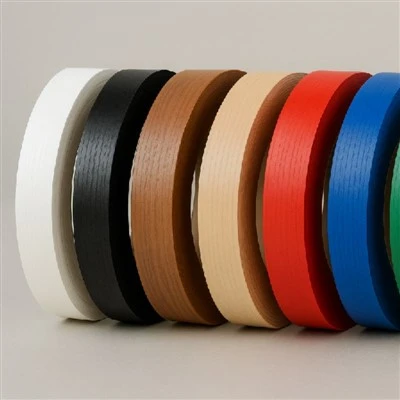
First off, let’s talk about what board edge banding and panel edge banding are. Essentially, they’re strips of material that are applied to the edges of boards or panels. Their main job is to cover up the raw edges, giving the surface a more finished look. They also protect the edges from damage, like chipping or moisture. We usually use materials like PVC, ABS, wood veneer, and acrylic for these edge banding products. They come in different colors, patterns, and thicknesses to fit different customer needs.
Now, can we use these edge bandings on metal panels? Well, it’s not a straightforward yes or no answer. There are a few things we need to think about.
Compatibility of Materials
One of the biggest factors is how well the edge banding material and the metal panel get along. Different edge banding materials have different properties, and some might work better with metal than others.
PVC edge banding is super popular. It’s flexible, easy to work with, and comes in a wide range of colors. But it might not bond well with metal. PVC has a smooth surface, and metal is often smooth too. This means there might not be enough friction for a good bond. Also, PVC can expand and contract with temperature changes, which could cause it to peel off the metal over time.
ABS edge banding, on the other hand, is a bit more rigid and has better heat resistance. It might have a better chance of bonding with metal compared to PVC. But we still need to use the right adhesive to make sure it sticks.
Wood veneer edge banding gives a natural, warm look. However, wood is a porous material, and metal isn’t. This difference can make it tough to get a good bond. Also, wood can be affected by humidity, which might cause it to warp or separate from the metal.
Acrylic edge banding is shiny and durable. It has good chemical resistance, which could be an advantage when it comes to metal. But like the other materials, it needs a proper adhesive to stick to metal panels.
Surface Preparation
Another important thing is how we prepare the metal panel surface. A clean, smooth surface is key for a good bond between the edge banding and the metal.
Before applying the edge banding, we need to clean the metal panel thoroughly. Any dirt, grease, or dust on the surface can prevent the adhesive from working properly. We can use a mild detergent and water to clean the metal, and then dry it completely.
Sometimes, we might also need to roughen up the metal surface a little bit. This creates more surface area for the adhesive to grip onto. We can do this by using a fine-grit sandpaper to gently sand the edges of the metal panel. But we have to be careful not to scratch the metal too much.
Adhesive Selection
The type of adhesive we use is crucial. Different adhesives work better with different materials.
For metal and edge banding, we need an adhesive that can bond well with both. Epoxy adhesives are a good option. They have strong bonding properties and can withstand a lot of stress. They also have good resistance to heat and chemicals.
Contact adhesives are another choice. They work by spreading the adhesive on both the edge banding and the metal surface, letting them dry a bit, and then pressing them together. This creates a strong bond quickly.
However, we need to make sure the adhesive we choose is compatible with the specific edge banding material and the metal panel. Some adhesives might react with the edge banding material, causing it to discolor or become brittle.
Application Process
The way we apply the edge banding to the metal panel is also important.
First, we cut the edge banding to the right length. We need to make sure it’s a bit longer than the edge of the metal panel to allow for any trimming later.
Then, we apply the adhesive according to the manufacturer’s instructions. We have to be careful to apply it evenly and not use too much or too little.
After applying the adhesive, we carefully place the edge banding on the metal panel and press it down firmly. We can use a roller or a hand tool to make sure the edge banding is in full contact with the metal surface.
Once the edge banding is in place, we need to trim off any excess material. We can use a sharp knife or a trimming tool to do this.
Advantages of Using Edge Banding on Metal Panels
If we can get the edge banding to work on metal panels, there are some benefits.
For one thing, it can improve the appearance of the metal panels. Edge banding comes in different colors and patterns, so we can give the metal panels a more custom look. It can also make the metal panels look more high – end and professional.
Edge banding can also protect the edges of the metal panels. It can prevent scratches, dents, and corrosion. This is especially important for metal panels that are used in high – traffic areas or in harsh environments.
Disadvantages and Challenges
But there are also some downsides and challenges.
As I mentioned earlier, getting a good bond between the edge banding and the metal can be tricky. We have to spend time on surface preparation and choose the right adhesive.
The cost can also be a factor. Some edge banding materials and adhesives can be expensive, and the application process might require some special tools and skills.
Over time, the edge banding might start to peel or separate from the metal panel, especially if it’s exposed to extreme temperatures or humidity.
So, in conclusion, while it’s possible to use board edge banding or panel edge banding on metal panels, it’s not without its challenges. We need to consider the compatibility of materials, do proper surface preparation, choose the right adhesive, and follow the correct application process.
If you’re thinking about using our edge banding products on metal panels, I’d be happy to help. I can give you more detailed advice based on your specific needs. Whether you’re working on a small DIY project or a large – scale industrial job, we’ve got the edge banding solutions you might be looking for. Just reach out to me, and we can start discussing your requirements. Let’s work together to find the best way to use edge banding on your metal panels!
Door Panel Edge Banding References:
- "Handbook of Adhesive Bonding"
- "Materials Science and Engineering: An Introduction"
- Industry reports on edge banding and metal panel applications
Linyi Meador New Materials Co., Ltd.
As one of the most experienced board edge banding or panel edge banding manufacturers and suppliers in China, we offer a wide range of products with superior quality. We warmly welcome you to buy bulk premium board edge banding or panel edge banding from our factory. Good service and punctual delivery are available.
Address: Meidu New Materials, No. 66 Zhenxing Road, Tanyi Town, Feixian County, Linyi City, Shandong Province
E-mail: meador@zohomail.cn
WebSite: https://www.meadorfactory.com/
