Hey there, if you’ve ever stood next to an aero engine on the tarmac during pre-flight checks—those massive metal giants that roar like something out of a sci-fi movie—you might’ve wondered how they keep running smoothly, flight after flight, year after year. As someone who’s spent the last decade working with an aero engine components supplier, I see this question all the time, mostly from maintenance teams and small airline ops that are trying to stretch their budgets without cutting corners on safety. The truth is, maintaining these parts isn’t just about swapping out worn pieces every few hundred hours—it’s a mix of science, routine, and knowing the tiny details that most people miss. Let me break this down like I would for a new mechanic I’m training, no stuffy jargon that makes your eyes glaze over. Aero Engine Components

First off, let’s get one thing straight: aero engine components don’t wear out the same way your car’s brake pads do. These parts operate in conditions that are straight-up brutal. Think temperatures that hit 2,000°C (that’s hotter than lava, by the way), pressure swings that crush a soda can in half a second, and tiny airborne particles—dust, sand, even volcanic ash—that act like sandpaper inside the engine. So every maintenance step starts with knowing exactly what each part is built to handle. For example, turbine blades? They’re made with single-crystal superalloys that are tougher than your grandfather’s wrench, but even those can develop tiny cracks if they’re exposed to hot spots for too long. That’s why the first rule of maintaining these parts is “don’t ignore the data.” We keep detailed records for every single component we supply—serial numbers, flight hours, inspection dates, even the temperature logs from every flight. If a turbine blade hit an unexpected hot spot on a flight from Dubai to London, that log doesn’t just sit in a folder—it flags that blade for a closer look next time it comes in.
Let’s start with the big-ticket parts everyone talks about: turbine blades and vanes. These are the ones spinning at 10,000+ RPM, so balance is non-negotiable. But before you even get to balancing, you’ve got to do a non-destructive inspection (NDI) to find hidden damage that you can’t see with the naked eye. A few years back, we had a customer bring in a batch of high-pressure turbine blades that looked perfect on the surface—no dents, no scratches. But when we ran them through eddy current testing (which uses magnetic fields to pick up tiny cracks), we found micro-fissures along the edge of the airfoil. Those cracks were only a few microns wide, but if they’d stayed, they’d have grown and eventually caused the blade to fail mid-flight. The customer was shocked—they thought a visual check was enough. Nope. For turbine parts, NDI isn’t optional. It’s step one every single time. After inspection, if the parts are good, they get a thermal barrier coating (TBC) touch-up. That coating is what keeps the superalloy from melting, and over time it chips or wears down from heat cycles. We use plasma spraying to reapply the TBC, but here’s the trick: you can’t just spray it on thick. If it’s too uneven, it creates its own hot spots. So we use a laser to measure the existing coating thickness down to 0.1 millimeters before applying the new stuff. Small details = big safety wins.
Next up: compressor blades and disks. These are the parts that pull air into the engine, so they’re exposed to all that junk in the atmosphere—dust, salt, bugs, even leftover runway debris. Corrosion is the biggest enemy here. I’ve seen a compressor disk that started as a perfectly smooth, shiny piece of metal, after just 5 years of coastal flights, have tiny pits in it from salt air. Those pits act like stress raisers—they make the disk way more likely to crack under pressure. So maintaining compressor parts is all about cleaning and corrosion protection. But not just any cleaning. Pressure washing with regular water? That’s a bad move. It can force water into tiny gaps between blades and disks, which then freezes at high altitudes and causes corrosion from the inside out. Instead, we use dry ice blasting or cryogenic cleaning—shots of CO2 ice that hit the surface, blast away grime, and turn to gas so there’s no leftover moisture. After cleaning, we apply a corrosion-resistant primer, but again, not just any primer. We use a zinc-rich epoxy that’s designed to withstand the extreme temperature swings compressor parts go through. Also, we check the blade tips constantly. As compressor blades spin, they flex, and over time the tips can rub against the casing. If they rub too much, you lose compression efficiency, which means the engine uses more fuel. So we measure tip gaps with a borescope—tiny camera on a long stick—and if the gap is too big, we either re-profile the blade tip or replace it. It’s cheaper to do this regularly than to wait until fuel bills skyrocket.
What about those smaller parts that people forget about—like seals, bearings, and fuel nozzles? These are the unsung heroes. A bad seal can let hot gas leak where it’s not supposed to, causing hot spots on turbine blades. A worn bearing can throw the whole engine out of balance. A clogged fuel nozzle can make the fuel burn unevenly, leading to increased emissions and stress on the engine. For these parts, the key is proactive replacement, not waiting for failure. Take fuel nozzles, for example. We recommend replacing them every 1,000 flight hours, even if they look fine. Why? Because over time, the tiny holes in the nozzle get eroded by fuel pressure, and the spray pattern gets distorted. A distorted spray doesn’t burn completely, which wastes fuel and creates more carbon deposits inside the combustion chamber. And carbon deposits build up on seals and bearings, right? So for seals, we do a fit check every 500 hours. We measure the clearance between the seal and the shaft, and if it’s outside the manufacturer’s specs, we replace it. It sounds like overkill, but when a single leaky seal can cost an airline thousands in extra fuel and a delayed flight, it’s worth every penny.
Another big one: storage and handling. I can’t tell you how many times we’ve gotten a part back that was damaged not in flight, but because someone dropped it or stored it in a dirty warehouse. Aero engine parts are precision-made—some turbine blades have a surface finish smoother than a mirror, with tiny cooling holes drilled that are smaller than a human hair. Drop a blade from waist height, even onto a soft mat, and you might not see a dent, but you could bend the airfoil just enough to throw the whole engine out of balance. So when we ship parts to customers, we use custom foam inserts that are molded exactly to fit each component, no loose parts rattling around. And we always include handling instructions: “don’t touch the airfoil with bare hands” (oil from skin causes corrosion), “store in a temperature-controlled area” (extreme heat can warp small parts), “use plastic gloves when moving parts”. We had a customer once who saved a few bucks buying cheap packaging for a batch of compressor blades, and half of them had small nicks from being jostled in a cardboard box. They had to scrap the whole batch—cost them way more than saving on packaging. Lesson learned.
Wait, let’s talk about repair vs. replacement. This is a huge topic, especially now that airlines are trying to lower operational costs. As a supplier, we don’t just sell parts—we also do repairs when it makes sense. But the line between repair and replacement is non-negotiable. For example, if a turbine blade has a small crack that’s less than 5% of the blade’s length, we can grind out the crack, re-profile the blade, and re-apply the TBC. But if the crack is longer than that, or if there’s any damage to the cooling holes, we can’t repair it. Trying to fix that would make the part weaker than a new one, and that’s a safety risk. We follow the OEM (original equipment manufacturer) specs to the letter here—no cutting corners. Even if a customer begs us to repair a part that should be replaced, we’ll tell them straight up that it’s not worth the risk. At the end of the day, our job is to supply reliable components, not take shortcuts.
Also, let’s not forget about data and training. A lot of maintenance teams use old school checklists, but these days, we’re integrating digital tools too. We give every customer a portal where they can track their parts’ flight hours, inspection dates, and repair history. If a component is coming up for its next check, the portal sends an alert. And we offer training sessions for maintenance techs, because even the best parts are only as good as the person working on them. Last year, we trained a team from a regional airline on how to use our new eddy current testing equipment—before that, they were using a less accurate method that missed small cracks. After the training, they caught three cracks on turbine blades that would have failed within 500 hours. That’s the impact of knowing how to work with these parts, not just working on them.
Let me wrap this up with a real example that sticks with me. A few years back, a small cargo airline brought in a set of compressor blades that had been on their MD-80 for 3,000 hours. They’d only done a visual check between flights, so they missed the corrosion pits that had started on the blade roots. We inspected them, and told them they had two options: replace the blades for $15,000, or repair the pits for $2,000. They chose repair. Six months later, they called us in a panic—one of their engines had shut down mid-flight, and the mechanic found a broken blade root. Turns out, the pits had gotten worse, and we’d missed that the repair didn’t fix the deepest pit. Wait, no—actually, we’d told them that repair was only a temporary fix, and that they should plan to replace the blades at 3,500 hours, but they ignored us to save more money. The engine damage cost them $200,000 in repairs, plus lost revenue from two weeks of grounded planes. That’s why we’re upfront with customers about what’s a good deal and what’s false economy. Maintaining aero engine components isn’t about saving a buck today—it’s about avoiding a disaster tomorrow.
So, if you’re a maintenance manager, line tech, or airline ops person, the takeaway is this: it’s not rocket science, but it’s specific. You can’t treat a turbine blade like a car part, you can’t skip NDI, you can’t ignore small cracks or corrosion, and you can’t cut corners on storage and handling. At the end of the day, these parts are what keep planes in the sky, and every step you take to maintain them is a step toward safer, more efficient flights.
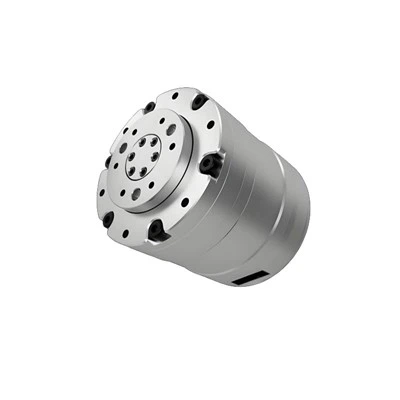
If you’re looking for reliable components, professional repair services, or even just to chat about how to set up a maintenance plan that works for your fleet, hit us up. We’re here to help you keep your engines running smoothly, no fluff, no hidden fees, just straight-up expertise on aero engine components.
Minimally Invasive Surgical Instruments References
- Federal Aviation Administration (FAA). (2021). Aircraft Maintenance Manual: Aero Engine Component Inspection and Repair. U.S. Department of Transportation.
- Rolls-Royce plc. (2022). Turbine Blade and Vessel Maintenance Guidelines for Commercial Engines. Rolls-Royce Technical Publications.
- International Air Transport Association (IATA). (2023). Corrosion Prevention and Control Manual for Aircraft Components. IATA Operations & Safety Department.
- Society of Automotive Engineers (SAE). (2020). Non-Destructive Testing Methods for Aerospace Superalloy Components. SAE International.
Jiangsu Zhengfang Dynamics Technology Co., Ltd.
As one of the most professional aero engine components manufacturers and suppliers in China, we’re featured by quality products and good price. Please rest assured to buy customized aero engine components made in China here from our factory. Contact us for pricelist.
Address: Building 3, No. 69 Feitian Avenue, Jiangning District, Nanjing City, Jiangsu Province
E-mail: hanks.liu@zfdynamics.com
WebSite: https://www.zhengfangdongli.com/
