Hey there! I’m a supplier of high-temperature cables, and I often get asked about how to test the performance of these cables. It’s a crucial topic because high-temperature cables are used in some pretty demanding environments, like industrial furnaces, aerospace applications, and power generation plants. So, getting their performance right is super important. In this blog, I’ll share some practical ways to test these cables to ensure they’re up to the task. High-temperature Cables
Visual Inspection
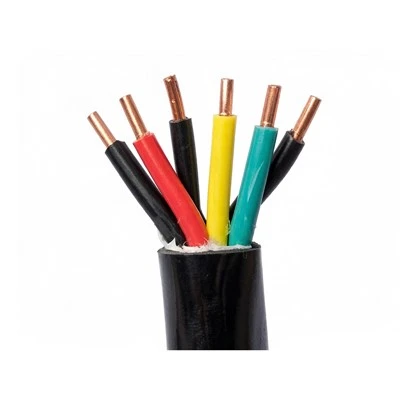
Let’s start with the simplest and most basic test: the visual inspection. This is something you can do right off the bat. When you receive a batch of high-temperature cables, take a good look at them. Check for any obvious signs of damage, like cuts, abrasions, or kinks in the outer sheath. A damaged sheath can expose the inner conductors to the harsh environment, which can lead to short circuits or other failures.
Also, look at the cable’s construction. Are the conductors properly insulated? Is the insulation material intact and free of cracks? Sometimes, you might notice bulges or irregularities in the cable, which could indicate internal damage. If you see anything suspicious during the visual inspection, it’s best to set those cables aside for further testing or discard them if the damage is severe.
Dimensional Checks
Next up, we’ve got dimensional checks. High-temperature cables need to meet specific size requirements to work properly. You’ll want to measure the outer diameter of the cable, the diameter of the conductors, and the thickness of the insulation. You can use calipers or micrometers for these measurements.
If the cable is too thick or too thin, it might not fit into the equipment it’s intended for. And if the insulation is too thin, it won’t provide adequate protection against high temperatures and electrical interference. So, make sure the dimensions are within the specified tolerances.
Temperature Resistance Testing
This is where things get a bit more technical. High-temperature cables are designed to withstand extreme heat, so it’s crucial to test their temperature resistance. One way to do this is by using a thermal chamber. You place the cable inside the chamber and gradually increase the temperature.
Monitor the cable’s performance as the temperature rises. Look for signs of degradation, such as changes in the electrical properties or physical appearance of the cable. For example, if the insulation starts to melt or become brittle, that’s a clear sign that the cable is not suitable for high-temperature applications.
Another method is the hot plate test. You place the cable on a hot plate and set the temperature to the rated maximum temperature of the cable. Leave it there for a specified period and then check for any changes. This test gives you a quick idea of how the cable performs under direct heat.
Electrical Performance Testing
High-temperature cables also need to maintain good electrical performance in harsh environments. One of the key electrical properties to test is the insulation resistance. You can use an insulation resistance tester to measure this. A high insulation resistance value indicates that the cable’s insulation is in good condition and can effectively prevent electrical leakage.
You’ll also want to test the cable’s conductivity. Low conductivity can lead to power losses and overheating. You can use a multimeter to measure the resistance of the conductors. If the resistance is too high, it could mean there’s a problem with the conductors, such as corrosion or poor connections.
Another important aspect is the capacitance of the cable. Capacitance can affect the signal transmission in high-frequency applications. You can use a capacitance meter to measure the cable’s capacitance and ensure it’s within the acceptable range.
Flexibility and Bend Radius Testing
In many applications, high-temperature cables need to be flexible and able to withstand bending. You can perform a flexibility test by manually bending the cable back and forth a certain number of times. Check for any signs of damage, such as cracks in the insulation or breakage of the conductors.
The bend radius is also an important factor. Every cable has a minimum bend radius specified by the manufacturer. You can use a bend radius gauge to ensure that the cable is not being bent beyond this limit. If the cable is bent too tightly, it can cause internal damage and affect its performance.
Flame Resistance Testing
High-temperature cables are often required to be flame-resistant. This is crucial in applications where there’s a risk of fire. You can perform a simple flame test to check the cable’s flame resistance.
Take a small section of the cable and expose it to a flame for a short period. Observe how the cable reacts. A flame-resistant cable should self-extinguish once the flame is removed. If the cable continues to burn or produces a lot of smoke, it may not meet the required flame resistance standards.
Chemical Resistance Testing
In some industrial environments, high-temperature cables may be exposed to various chemicals. So, it’s important to test their chemical resistance. You can immerse the cable in a sample of the chemicals it’s likely to encounter and leave it there for a specified period.
After that, check the cable for any signs of degradation, such as swelling, discoloration, or loss of mechanical properties. If the cable shows significant damage, it may not be suitable for use in that particular chemical environment.
Aging Testing
High-temperature cables are expected to have a long service life. To simulate the effects of long-term use, you can perform aging tests. One common method is to expose the cable to elevated temperatures and humidity for an extended period.
This accelerates the aging process and allows you to assess how the cable will perform over time. Monitor the cable’s electrical and mechanical properties during the aging process. If the cable starts to degrade rapidly, it may not have a long enough service life for your application.
Wrap-Up
Testing the performance of high-temperature cables is a multi-step process. It involves a combination of visual inspections, dimensional checks, and various technical tests to ensure that the cables can withstand the harsh environments they’re designed for.
If you’re in the market for high-temperature cables, it’s important to choose a supplier who conducts these tests rigorously. That way, you can be confident that you’re getting high-quality cables that will perform reliably in your application.
Compensating Cables If you’re interested in purchasing high-temperature cables or have any questions about our testing procedures, feel free to reach out. We’re here to help you find the right cables for your needs and ensure that they meet your performance requirements.
References
- Electrical Testing Handbook, 3rd Edition.
- High-Temperature Materials for Engineering Applications.
- Standards for Cable Testing and Performance.
Anhui Yuantong Cable Co., Ltd.
As one of the most professional high-temperature cables manufacturers and suppliers in China, we offer a wide range of cables with superior quality. Please feel free to wholesale bulk customized high-temperature cables from our factory. Also, pricelist is available.
Address: Yongfeng Industrial Park, Tianchang City, Anhui Province
E-mail: ahytcable@126.com
WebSite: https://www.yuantongcable.net/
