Hey there, if you’ve ever needed a part that’s not off-the-shelf—something that fits your exact machine, cuts down on waste, or holds up in a wild, specific environment—you’re probably looking for precision custom components. I’m the owner (and the guy who’s actually in the shop a few days a week, not just behind a desk) at a precision custom components supplier, and I get asked all the time: “How do you make something that’s totally custom, to super tight specs, without messing up?” Precision Custom Components

It’s not just grabbing a part from a catalog and tweaking it. This process is the backbone of what we do, and it’s way more collaborative than most folks think. I’m gonna walk you through it like I’d explain it to a new intern—no jargon, no fancy fluff, just the real steps we take to make sure every part we ship actually works for you, not just looks good on paper.
First off, the starting point isn’t a CAD file. It’s your problem. Let’s be real: you don’t need a custom component just for the sake of being “custom.” You need it because the off-the-shelf stuff isn’t doing the job. Maybe your old gearbox part is wearing out too fast in your desert agriculture rig, or that medical device tool you’re building needs a tiny, smooth part that won’t scratch skin, or your aerospace test jig can’t have any tiny gaps that throw off data. So when you reach out (via email, call, or even a random text—yeah, I answer texts) with that pain point, the first 24 hours are all about us just listening, no agenda.
We’ll ask stupid questions, too. Like, “You said the part has to hold 500 psi, but is that in a vacuum? Or wet? Or when it’s sitting in a parts bin for 6 months before you use it?” Those details sound trivial, but they make or break the part. Last year, a customer came to us with a stainless steel roller they said needed to be “rust-proof.” Turns out, they were putting it in a seawater desalination system where standard 304 stainless fails after 2 weeks. We didn’t just stick them 304—we went with a marine-grade 316L with a passivation step, and that part’s still running strong 18 months later. So that first step: intake, no rushed moves, just digging into what the part actually has to do, not just what you think it needs.
Once we’ve got the full pic, the next step is translating that into something we can actually build—without guessing. A lot of customers think “precision” means to the thousandth of an inch, but it’s not a number for numbers’ sake. It means the spec is tied directly to your function. So if you need that roller to turn smoothly without wobbling, we’ll note the diameter tolerance along the entire length, not just the ends. If it’s for a medical device, the surface finish can’t have any micro-scratches that would catch on tissue, so we’ll specify a mirror-like polish that’s tested to meet ISO standards.
This is where I jump on calls with our machinists and our quality team—no middleman. We’ll draw up a rough draft (sometimes on a whiteboard, sometimes in our CAD software) and test if it makes sense. Wait, can we actually machine that tiny undercut you asked for without weakening the part? Is that material even available in the size you need, or would we have to source it from a specialty supplier? That’s where a lot of bad custom parts come from: someone designing something that sounds cool, but can’t be built (or would cost a fortune). We flag that early. Last quarter, a customer wanted a part with a 0.008-inch wall thickness in titanium. Our lead machinist said, “We can do that, but only if we use this specific Swiss-type lathe and a custom tool holder—otherwise, it’ll flex and crack during machining.” We worked with the customer to adjust a tiny feature so it was buildable, no extra cost, and they got the part they needed. No “oops, can’t make that” later.
Okay, so we’ve got the design locked in, and now it’s time for the prototype. This is non-negotiable for us—we never jump straight to full production. Prototype phase is where we test it in the real world, not just on our coordinate measuring machine (CMM) that checks dimensions to 0.0001 inch. We send the prototype to you, you test it in your machine, and we adjust until it’s perfect.
I remember a customer in the wind energy industry who needed a custom bolt for a turbine blade that had to withstand extreme temperature swings. Our first prototype bolt passed all our lab tests, but when they bolted it on, it was half a millimeter too long, so it hit a neighboring part and caused friction. Oops. We went back, tweaked the length, machined the threads a little differently, and sent a new prototype—this time, it fit exactly. No problem. The prototype phase isn’t a waste of time; it’s the part that keeps us from sending you a part that’s “perfect on paper” but useless for your setup. For high-volume jobs, we’ll even do a small batch of 10-20 prototypes so you can test them side-by-side, check for consistency, and make sure they hold up over time.
Once the prototype is signed off, it’s time for production. This isn’t just hitting “go” on a CNC machine and walking away—precision custom parts need consistent quality, even when we’re making 1000 of them instead of 1. That’s why we use a mix of automated processes and hands-on checks. Every 20 parts, we pull one out and run it on our CMM, check the surface finish, test for hardness, and make sure the material is what we said it is (we even have a material tester that can confirm steel vs. aluminum in 10 seconds, just to be sure). For parts that go into harsh environments, we do post-process steps: passivation for steel to prevent rust, anodizing for aluminum for extra durability, coating for corrosion resistance, whatever you need. We also track every single part—if there’s ever an issue, we can look back and see exactly which machinist worked on it, what machine it was run on, when it was made, and what material was used. That level of traceability is huge for industries like aerospace or medical, where you can’t take chances.
Wait, but what about changes? Even after production starts, stuff happens. You might realize you need the part a little stronger, or the lead time got pushed back, or you need to adjust the spec because your machine changed. We don’t make you jump through hoops for that. If it’s a small tweak, we can adjust it on the fly—no need for a whole new design. If it’s a bigger change, we’ll redo a quick prototype and get your sign-off before adjusting production. Last year, a customer in the robotics field noticed that a custom gripper finger we’d made was slipping a little on the part they were handling. They didn’t have to stop production for weeks—we added a tiny, textured (but still smooth) surface to the finger, made a new prototype in 3 days, and swapped it into their next batch, no extra cost.
Now, let’s talk about lead times, because that’s a big pain point for a lot of folks. We’re not like big factories that make parts in 6 weeks, sometimes. But wait—precision takes time, right? You can’t rush a part that needs to be 0.0005 inch over 10 inches, or has to survive 10,000 cycles. But we also know you don’t want to wait 3 months for a prototype. So our sweet spot is 1-2 weeks for a prototype, 2-4 weeks for small-to-medium production runs, and we always give you a firm timeline at the start—no “we’ll get back to you next week” when you ask when it’ll ship. We’ll even alert you if there’s a potential delay (like a custom material taking an extra day to arrive) so you can adjust your schedule, not get caught off guard.
What makes our process different from other custom parts shops? Honestly, it’s the human part. A lot of places treat custom orders like another number on a spreadsheet. We talk to you like we’re building something for our own business, not just collecting a check. If we see a way to make your part better without extra cost, we’ll tell you. If you’re using a subpar material and it’ll fail in your application, we’ll say that, even if it means we don’t make the part. Last year, a small business owner came to us with a $500 order for a custom plastic part for their home brewing equipment. We looked at the design and said, “Plastic will warp after 10 uses—let’s swap to a food-grade, corrosion-resistant nylon for just $100 more, and it’ll last years.” They jumped at it, and now they recommend us to all their brewing buddies. That’s the stuff that matters, not just hitting specs.
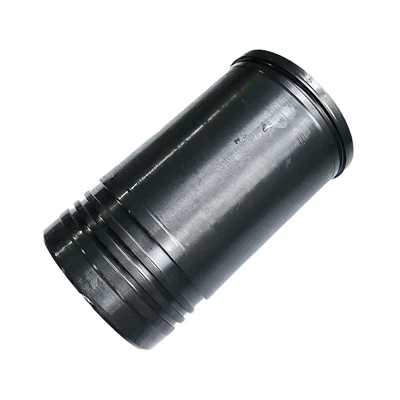
Now, if you’ve got a part that’s causing you headaches—whether it’s breaking too often, not fitting right, or just not performing like it should—we’re here to help. We don’t do cookie-cutter solutions, and we don’t overcharge just because it’s custom. We’ll walk you through every step, from the first call to when you get the part, and make sure it’s exactly what you need. If you want to chat through your project, no pressure—just reach out and we can figure out if we’re a good fit.
Auto Parts References:
- ISO 9001:2015, Quality management systems — Requirements
- American Society of Mechanical Engineers (ASME) Y14.5-2018, Dimensioning and Tolerancing
- Machining Data Handbook, 5th Edition, Society of Manufacturing Engineers (SME)
- Medical Device Coating Standards, USP Class VI Compliance
Hubei Kangding Machinery Equipment Co., Ltd.
We’re well-known as one of the leading precision custom components manufacturers and suppliers in China, specialized in providing high quality customized products. Please feel free to buy advanced precision custom components for sale here from our factory. For pricelist, contact us now.
Address: Qianchang Industrial Park, Jingshan County, Jingmen City, Hubei Province
E-mail: 339248585@qq.com
WebSite: https://www.cnkangding.com/
