Hey everyone, it’s Jake from [Your Company Name]—yep, the guy who’s been in the scroll oil-free compressor game for almost a decade now. If you’ve been around our shop, you know we live and breathe these things, so when folks ask me “what’s the deal with market trends for scroll oil-free compressors?” I don’t just pull stats out of thin air. I’ve talked to tons of your guys—manufacturers, industrial facility managers, even small business owners who just need reliable compressed air for their day-to-day. Let me break this down like I would over a coffee after a long day at a trade show—no stuffy jargon, just real talk. Scroll Oil-free Compressor

First off, let’s cut to why scroll oil-free compressors even matter right now. A lot of people still mix them up with oil-lubed models, but here’s the thing: oil-free scroll units don’t have a single drop of oil touching the compressed air stream. That makes them perfect for industries where even a tiny oil contaminant would mess up your product—food and beverage, pharmaceuticals, electronics manufacturing, medical devices. If you’ve ever had a batch of packaging reject because of oil residue, you know exactly why that’s a big deal.
Now, the biggest trend I’ve seen over the last 3 years? Skyrocketing demand from small to mid-sized manufacturers. Back in the day, oil-free compressors were seen as these big, expensive beasts that only huge factories could justify buying. But new tech has flipped that script. Modern scroll oil-free units are way more compact, energy-efficient, and budget-friendly than they were 10 years ago. A few months back, I was talking to a craft brewery owner in Portland—he used to rent a big oil-lubed compressor and pay like $800 a month for rentals plus cleanup for his bottles. He bought one of our 5HP scroll oil-free units last quarter, and he’s already saving $300 a month just on rental fees, plus he doesn’t have to stress about oil getting into his beer cans. That’s the kind of win small businesses are chasing right now.
What’s driving that demand? Two big things: stricter environmental rules and a lot of industries figuring out that “waste” isn’t just something you throw away—it’s something that costs you cash. Let’s start with regulations. The EPA and similar bodies around the world are cracking down on industrial air emissions, but even more so, on product safety. For food companies, for example, the FDA updated its guidelines two years ago to require that any air used in food processing is 99.9% free of contaminants. Oil-lubed compressors can get you close, but you still need filtration systems that add cost and maintenance. Scroll oil-free? They meet that standard straight out of the box. Same with pharma—if you’re making inhalers or sterile solutions, even a tiny oil particle can ruin a batch. That’s not a “nice-to-have” anymore; it’s a requirement.
Then there’s energy efficiency, which is huge for anyone who runs equipment 8+ hours a day. I don’t care what industry you’re in, utility bills are going up everywhere. Scroll compressors are way more efficient than other types of oil-free compressors—like reciprocating oil-free ones, which use pistons that cause more friction and waste energy. A lot of our customers tell us that their energy bills dropped 15-20% after switching to scroll oil-free. One metal stamping shop in Detroit ran 12 hours a day, 5 days a week, and their old compressor was using 12 kWh more than the new one we installed. Multiply that over a year? That’s like a whole extra paycheck for their maintenance team.
Another trend I can’t ignore: the rise of IoT integration in these compressors. A few years ago, compressors were just “set it and forget it” machines. Now, our units come with a little smart module that tracks things like run time, air temperature, pressure drops, and even predicts when a part will wear out before it breaks. A big aerospace parts maker we work with uses these sensors to schedule maintenance during their slow nights, so they don’t have to shut down a whole shift because a compressor died unexpectedly. That’s a game-changer—unplanned downtime for a factory can cost tens of thousands of dollars an hour. Our smart compressors cut that downtime by like 40% for most users. I even had a guy who runs a small print shop tell me he gets a text on his phone if his compressor’s air filter is getting clogged. No more having to go check the machine every morning—he can just fix it when it’s convenient.
Wait, but it’s not just about commercial and industrial use—consumer demand is trickling down too. Think about dental offices, small medical labs, even food trucks that do commercial catering. Dental clinics need oil-free air for their tools, right? If you’ve ever had a dental procedure that used a drill, that air has to be totally clean. A lot of small clinics used to use oil-lubed compressors with extra filtration, but now they’re going for smaller scroll oil-free units because they don’t want to deal with changing those expensive filters every month. Same with food trucks that do high-volume sandwich prep or pastry decorating—no one wants oil spots on their cookies, trust me.
But let’s be real, it’s not all smooth sailing. There’s a common misconception that scroll oil-free compressors are less durable than oil-lubed ones. A few years back, some cheaper units on the market had a bad rap for breaking down fast because they used low-quality scroll wraps. But the good news is, the market is starting to self-correct here. Customers are getting savvier—they’re not just going for the lowest price, they’re looking for units with good warranties and proven performance. That’s where we come in: we use high-grade aluminum scrolls and a dual-seal design that cuts down on wear and tear. Our customers who’ve had our units for 5 years still run them 8 hours a day with no major issues. So that misconception is fading, which is helping the market grow even more.
Another trend I’ve noticed is customization. Back when I started, you pretty much bought a compressor off the shelf. Now, customers want units tailored to their specific needs. A pharmaceutical plant might need a compressor that runs at 100 PSI for sterile packaging, while a craft brewery might need a lower 80 PSI for can filling. We work with a lot of customers to build custom units—different sizes, different voltage options, even ones that can handle extreme temperatures for outdoor use (like for construction sites or mobile food trucks that operate in hot or cold climates). That flexibility is a big reason scroll oil-free is taking market share from other types.
Let’s talk numbers, just to put this in perspective. I read a recent industry report that said the global scroll oil-free compressor market is going to grow at a CAGR of 6.2% over the next 5 years. That might not sound super fast, but compared to other types of compressors (which are growing at like 3-4%), that’s pretty solid. The biggest drivers of that growth are, like I said, food and beverage, pharmaceuticals, and electronics manufacturing. Electronics companies need ultra-clean air for assembling semiconductors—even a tiny particle of oil can ruin a $10,000 microchip. So they’re investing big in oil-free scroll units because they can’t afford to waste product.
Wait, what about the shift towards remote work? No, wait, that’s not directly related, but a lot of small businesses that were hit hard during the pandemic are now upgrading their equipment. They realized that having reliable, clean compressed air isn’t a luxury—it’s a necessity to keep orders coming in. A lot of our customers started buying replacement compressors last year after putting it off for 2 years, and they’re going with scroll oil-free because they don’t want to deal with the hassle of oil-related maintenance.
Another thing: sustainability. A lot of our customers are big on their ESG goals now. Oil-lubed compressors have to change oil every few months, and that used oil is hazardous waste. Disposing of that waste costs money, and it’s not great for the environment. Scroll oil-free compressors don’t use any oil, so there’s no hazardous waste from oil changes. That’s a huge selling point for companies that are trying to lower their carbon footprint. I had a CEO of a snack food company tell me that switching to our scroll oil-free units helped them cut their hazardous waste disposal costs by $1,200 a year—and check a box on their ESG report for their investors. That’s the kind of double win that makes businesses sit up and take notice.
Now, if you’re someone who’s in the market for a scroll oil-free compressor—whether you’re a small business owner or a plant manager—what should you be looking for? First, don’t just go for the cheapest unit. Check the warranty (we offer a 5-year warranty on our compressors, which is way longer than most competitors). Ask about energy efficiency ratings—look for units that are certified by the Department of Energy or similar agencies, because that’s where you’ll save the most money long-term. And if you have specific needs (like needing it to run 24/7, or for a small space), talk to a supplier who can customize it for you. A lot of vendors will just push a standard unit, but the best ones will listen to your needs first.
I’ll be honest, 10 years ago, I never would have thought scroll oil-free compressors would be this big. But every time I talk to a customer who’s saved money, reduced downtime, or avoided a product reject because of our units, it makes me even more excited about this market. The trends are clear: demand’s going up, technology’s getting better, and more industries are realizing that clean, reliable compressed air is worth the investment.
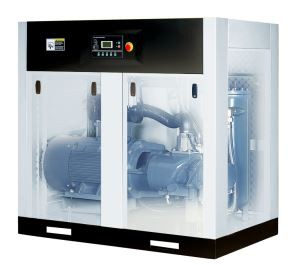
Dry Oil Free Screw Air Compressor If you’re thinking about upgrading your compressor, or even if you’ve been having issues with your current unit—whether it’s too much downtime, oil contamination, or sky-high energy bills—reach out. I don’t do hard sells, I just give straight talk. I’ve helped dozens of businesses find the right scroll oil-free compressor for their needs, and I’d be happy to help you too. Let’s chat about what you’re working on, and we can figure out a solution that fits your budget and your requirements.
References
- Global Scroll Oil-Free Compressor Market Report 2023-2028, Industry Research & Insights.
- U.S. Environmental Protection Agency, Industrial Air Emission Standards for Food and Pharmaceutical Manufacturing.
- Energy Star, Certified Compressor Equipment Efficiency Ratings.
- Small Business Administration, Cost-Saving Strategies for Industrial Equipment Upgrades.
- Occupational Safety and Health Administration, Clean Air Standards for Medical and Dental Applications.
Xiamen HighQ Compressor Co., Ltd.
With over 20 years’ experience, Xiamen HighQ Compressor Co., Ltd. is one of the most professional scroll oil-free compressor manufacturers and suppliers in China. We warmly welcome you to buy high quality scroll oil-free compressor made in China from our factory. Good service and punctual delivery are available.
Address: 7th F. No.704 Yi Hua Center Xiamen China 361100
E-mail: vincent@hqcompressor.com
WebSite: https://www.hqcompressor.com/
