If you’ve ever shopped for LED panel lights—whether for an office renovation, a retail store refresh, or even updating your home’s lighting—you’ve probably stared at a product spec sheet and found yourself squinting at the line that says “lumen output.” It’s one of those terms that feels like it should be straightforward, but when you’re sorting through dozens of options, it’s easy to get confused: Is there a “standard” average lumen output I should be targeting? As someone who’s worked as an LED panel light supplier for the better part of a decade, I hear this question at least a dozen times a week from architects, project managers, and even homeowners trying to make the right choice without wasting money. Today, I’m breaking down what the average lumen output for these lights actually is, why it varies, and what that means for your next lighting project. LED Panel Light
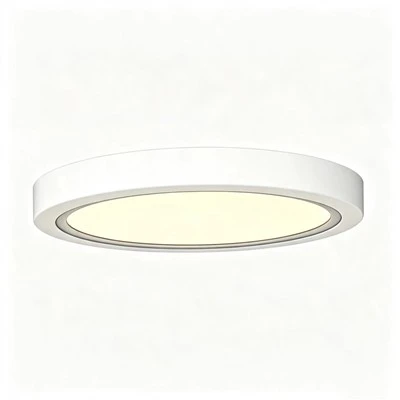
First, let’s start with the basics, because I’ve found most of the confusion comes from mixing up terms. Lumen output isn’t the same as brightness perception, and it’s not a one-size-fits-all number. A lumen (lm) is a unit that measures the total amount of visible light emitted by a source, right? Not how bright that light feels to your eyes, not how much energy it uses—just the raw, visible light output. That’s important because a lot of old marketing lingo still lingers, where people might confuse “watts” (which measure power use) with brightness, but LEDs are way more efficient than old incandescents or fluorescent tubes, so that mix-up doesn’t work anymore.
Now, when people ask about the average lumen output of an LED panel light, the first thing I tell them is: it depends on the size of the panel. If you’re holding a 1×1 foot panel, that’s way different from a 2×4 foot panel that’s used to light a full classroom. Let’s pull from real data I’ve gathered over years of supplying panels to different sectors. For residential use—think under-cabinet lighting in kitchens, closet panels, or even ceiling panels in a small home office—the average lumen output hovers between 1,000 lm and 3,000 lm. I see a lot of homeowners go for 1,500 lm for a 1×1 foot panel, and that works great for a bedroom or hallway; 2,500 lm is more common for a larger 2×2 foot panel that’s used in a home office or living room. That range makes sense because residential spaces don’t need the intense light of commercial areas, and they want to avoid harsh, glaring light that strains your eyes after a long day.
Now, flip that to commercial and industrial spaces—this is where most of my bulk orders come in, because offices, retail stores, schools, and warehouses need consistent, high-quality light that covers large areas. The average lumen here is way higher, usually between 4,000 lm and 10,000 lm, based on panel size. A standard 2×2 foot commercial panel will typically output between 4,000 lm and 5,500 lm, which is perfect for open office cubicles, conference rooms, or small retail boutiques that want bright but even light for displaying products. For larger 2×4 foot panels, which are the workhorses of schools, hospitals, and big-box retail, the average jumps to 7,000 lm to 10,000 lm. Why so high? Those spaces need to meet OSHA (Occupational Safety and Health Administration) guidelines for workplace lighting, which require enough lumens to prevent eye strain, reduce accidents, and make it easy to see fine detail. For example, a classroom needs enough light for kids to read textbooks and write on whiteboards, so a 2×4 panel with 8,000 lm is a common middle ground we supply for K-12 schools across the country.
Wait, but I should mention that there’s a growing segment of “high-lumen” LED panels for specialized use, too. For things like art galleries, retail display cases, or hospital operating rooms, you might see panels with 12,000 lm or even higher, but those are not the average. Most of the panels we sell fall right in those residential and commercial ranges I mentioned, because that’s what works for 90% of our customers’ needs.
Now, why does this number vary so much, and why can’t you just pick a random lumen count? A common mistake new buyers make is thinking higher lumens are always better. But that’s not true—too many lumens in a small space can cause glare, eye fatigue, and even higher energy bills. For example, a small 1×1 foot residential panel with 5,000 lm is way too bright for a home office, and it will feel harsh and uncomfortable after a few hours of work. On the flip side, a 2×4 foot commercial panel with only 3,000 lm won’t provide enough light for a warehouse, where workers need to see inventory labels clearly. That’s why our team doesn’t just sell panels with a set lumen number—we help customers match the lumen output to their specific space size and use case.
Another factor that affects lumen output is efficiency. Modern LED panels are way more efficient than they were even five years ago, meaning they can produce more lumens for less power. Ten years ago, a 2×2 panel might have output 3,000 lm at 30 watts, but today, a 2×2 panel can output 5,000 lm at just 28 watts, which is a huge upgrade. That’s one of the reasons LEDs have become so popular—they save energy while delivering brighter, more consistent light. As a supplier, I always check the efficacy (lumens per watt, or lm/W) of the panels we offer, because that’s a better metric than just raw lumens. A panel with higher lm/W is not only brighter but also uses less electricity, which saves customers money on utility bills over time. For reference, the average efficacy for the panels we supply is between 150 lm/W and 180 lm/W, which is above the industry average of around 130 lm/W, based on recent testing from lighting industry groups.
I should also touch on a point that I think gets overlooked: lumen depreciation. This is the rate at which a light source loses its brightness over time. A lot of cheap, low-quality LED panels will lose 30% of their lumen output in just two years, so when you’re comparing lumen numbers on paper, it’s important to ask about lumen maintenance. The average lifespan of the panels we supply is 50,000 hours, and they maintain at least 90% of their original lumen output after 50,000 hours—meaning they’ll stay bright for years, not just a few months. That’s a big difference from cheaper alternatives, and it’s something our customers always notice down the line when they don’t have to replace lights every few years.
Now, let’s get back to that original question: what is the average lumen output of an LED panel light? Based on our sales data and industry testing, the global average across all residential and commercial LED panel lights is roughly between 3,000 lm and 6,000 lm. That’s the sweet spot that works for most everyday applications: small residential panels, 2×2 office panels, and standard retail lighting. If you narrow it down by sector, the average residential LED panel is around 2,000 lm, while the average commercial LED panel is around 6,500 lm. That makes sense when you think about the different needs of each space.
I’ve seen a lot of misinformation online that says “LED panels are all 10,000 lm” or “all residential panels are 1,000 lm,” and that’s just not true. Lighting is highly customizable, and lumen output is one of the key variables that makes it fit for purpose. Last year, we worked on a project for a small coffee shop that wanted warm, inviting light for its seating area, so we supplied 2×2 panels with 4,000 lm and a warm 3000K color temperature, which was perfect—bright enough to read menus but not so bright that the space felt sterile. Another project was a high school gym that needed light for basketball games, so we installed 2×4 panels with 9,000 lm and a cool 5000K color temperature, which provided enough light for players to see the ball and referees to make calls accurately. Both projects used panels in the average lumen range, but tailored to their specific needs.
As someone who’s been in this business for a while, I’ll be honest: when I first started, lumen output felt like a confusing number that only lighting engineers cared about. But after talking to hundreds of customers, I’ve realized it’s one of the most important numbers to get right. Too dim, and the space feels dark and uninviting; too bright, and it’s uncomfortable and wasteful. That’s why we don’t just list lumen numbers on our product pages—we include guidance on which lumen count works for which space, and we’re always happy to help a customer figure out what they need, even if they don’t know the exact specs.
If you’re in the market for LED panel lights, whether for a small home project or a large commercial build, it’s important to look beyond just the average number and consider your space, how it’s used, and your budget. Lumen output should be paired with color temperature (warm vs. cool light), CRI (color rendering index, which measures how accurately light shows true colors), and lifespan, all of which play a big role in how your lighting feels.
At the end of the day, the average lumen output of an LED panel light isn’t a fixed number—it’s a range that adjusts based on what you’re using the light for. For most everyday applications, that range is 1,000 lm to 10,000 lm, with the average falling right around 3,000 lm to 6,000 lm. If you’re not sure what’s right for your project, I’m here to help—our team has years of experience working with all types of spaces, and we can guide you to the right panels for your needs. Whether you’re updating a single room in your home or outfitting an entire office building, we can provide high-quality, efficient LED panels that meet your requirements and fit your budget. Don’t hesitate to reach out and start a conversation about your lighting project—we’re here to help you make the right choice for your space.
Fixed Luminaires References
- Illuminating Engineering Society (IES). Lighting Handbook: Reference and Application, 10th Edition. 2020.
- U.S. Department of Energy. "LED Lighting Factsheet: Lumens, Watts, and Energy Efficiency." 2022.
- American National Standards Institute (ANSI). "Standard for Photometric Measurements of Solid-State Lighting (SSL) Products." 2021.
- National Lighting Product Information Program (NLPIP). "LED Panel Lights for General Illumination." 2023.
- Occupational Safety and Health Administration (OSHA). "Workplace Lighting Guidelines for General Industry." 2022.
Debesen (Shanghai) Optoelectronics Technology Co., Ltd.
We are one of the most professional led panel light manufacturers and suppliers in China, featured by quality products and good service. Please rest assured to wholesale advanced led panel light in stock here and get quotation from our factory. We also accept customized orders.
Address: No.258 Xiucheng Road, Fengcheng Town Economic Development Zone, Fengxian District, Shanghai
E-mail: Debesen258wendy@163.com
WebSite: https://www.debesen.com/
