Hey everyone, it’s Mia from the nanofiltration membrane team – the one who’s probably spammed your inbox last month with our new low-fouling NF modules (sorry not sorry, sales’ job is to be annoying). Today we’re talking about something that comes up at least once a week in our support calls, especially from water treatment, food and bev, and industrial wastewater folks: that concentrated solution from nanofiltration filtration. You know the stuff I mean – the gunk that’s left over after your NF pulls out all the good stuff (or the stuff you want to keep) from your feed water, that super concentrated brine or waste stream that’s staring you down like “what am I supposed to do with you?” Nanofiltration Membrane
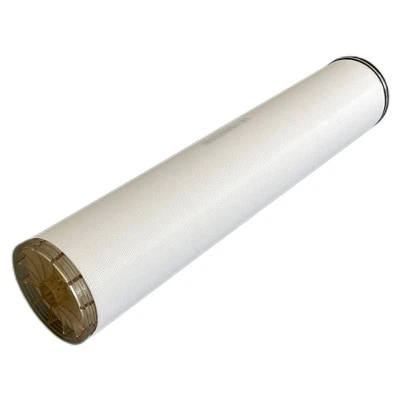
Let’s start with a quick reality check first, just to make sure we’re all on the same page. Nanofiltration membranes don’t work like reverse osmosis – they’re that middle kid, right? Tighter than microfiltration, looser than RO, so they cut out divalent salts, organic compounds, even some heavy metals depending on the membrane model. The concentrate is the leftover: it’s got all the stuff the membrane didn’t let through, cranked up 2x, 5x, sometimes even 10x the original concentration. For a lot of our clients, that’s the part that feels like a problem. They’ll call me panicking, saying “Mia, my NF concentrate’s salt level is too high to discharge to the local treatment plant” or “I can’t just dump this, I’ll get fined.” And honestly? I get it. Most standard operating procedures I see for NF don’t even touch this part – they focus on picking the membrane, running the system, but the concentrate is an afterthought. That’s where we come in, as membrane suppliers who actually test the end-to-end process.
First, let’s break down what makes your concentrate unique, because one size never fits all (pun intended, I work with membranes all day, I can’t help myself). If you’re in food and bev, like a brewery or a dairy, your concentrate’s probably got leftover sugars, proteins, or even lactic acid – stuff that might even be reusable, if you know how to handle it. If you’re industrial, like a textile plant, it’s likely dyestuffs, salt, or heavy metals. Municipal? It’s probably secondary wastewater concentrate, high in total dissolved solids (TDS) and small organic molecules. That context changes everything, which is why a lot of generic “fixes” online are garbage – they don’t account for your specific concentrate makeup.
Now, let’s get into the actual solutions, the ones we’ve tested with hundreds of clients (I still have a spreadsheet of their results, don’t judge) that actually work, no fluff.
First up: Concentrate Reuse. This is the holy grail if you can pull it off, because it cuts waste, cuts costs, reduces the amount of makeup water you need to run your NF system. Wait, you thought NF only rejects stuff? No, some components in the concentrate are actually valuable. Let’s take our dairy client, for example – they were running NF to separate whey protein from lactose, and their concentrate had high levels of lactose that they were just paying to dispose of. We had them add a second smaller NF stage (one of our low-pressure NF modules, super efficient) to that concentrate, and suddenly they recovered 70% of the lactose, which they sold as a byproduct. That’s revenue, not a cost. Another example: a textile plant we worked with, their NF concentrate had leftover dye salts. Instead of dumping it, they filtered that concentrate through an electrocoagulation unit (we helped them pick the right combo, membrane + pretreatment) to remove the dye, then ran it back through the NF system. Cut their water use by 40% and their disposal fees by 60%. The key here is: test your concentrate’s components first. We offer free small-scale concentrate tests for clients, by the way – just reach out, we’ll send you a kit you can run in-house or send to our lab, and we’ll tell you exactly what’s worth pulling out.
Second: Membrane-based Concentration/Evaporation Hybrid Systems. Wait, I know, you’re thinking “evaporation is expensive, right?” But modern evaporation tech paired with NF concentrate isn’t like the old days. We’ve worked with clients who pair their NF system with a low-temperature evaporator – way cheaper to run than high-temp models – because the NF already cranks up the concentration so high. Let’s do the math: if your feed water has 500 ppm TDS, your NF concentrate might be 2,500 ppm. Evaporating 2,500 ppm to a solid is way less energy than evaporating 500 ppm raw water. One of our mining clients was using RO for their process, but switched to NF (our high-rejection NF modules) and paired it with a small evaporator for the concentrate. They cut their evaporation energy use by 55% – that’s a massive cost saver. Pro tip from our team: don’t buy a generic evaporator. Make sure it’s compatible with your NF concentrate’s makeup – if there’s high organic content, you need an evaporator with anti-fouling internals. We can connect you to vetted evaporator partners, so you don’t end up with a system that clogs after a month.
Third: Safe Discharge with Pretreatment. If reuse or evaporation isn’t feasible for you (maybe your concentrate has trace heavy metals that are hard to pull, or you’re in a location with strict discharge rules), then pretreatment to make it compliant is your next step. A lot of clients skip this because they think it’s complicated, but it doesn’t have to be. For example, if your NF concentrate has high TDS and small organic molecules, adding a granular activated carbon (GAC) filter before discharge can remove 80-90% of the organic compounds, making it meet local municipal discharge limits. For heavy metals, a simple chemical precipitation step paired with a microfiltration (MF) polish is enough – we’ve seen clients go from 2 ppm lead in concentrate to below 0.05 ppm, which is the EPA limit, for less than $1,500 in upfront equipment. Wait, but what about brine concentrate? A lot of industrial NF concentrate ends up as brine. If you’re not near a salt facility, zero liquid discharge (ZLD) is an option, but even partial ZLD works. We had a food processing client who switched from full ZLD (which was costing them $12k a month) to partial: they ran their concentrate through a membrane distillation unit (another tech we test regularly) to recover 85% of the water, and the remaining 15% is a salt cake that they send to a licensed disposal facility – cost cut by half.
But wait, let’s talk about the mistakes we see clients make all the time, because avoiding these will save you so much headache. First mistake: Trying to treat the concentrate with the same NF membrane you used for the main process. No – the main NF membrane is optimized for feed water, not for dirty, concentrated concentrate. That’s why our low-fouling, high-stability NF modules for concentrate treatment are different – we design them to handle high TDS and organic load without fouling as fast. Second mistake: Not testing your concentrate before picking a solution. We once had a client who bought a $5k evaporator because a generic sales rep told him it would work for “any NF concentrate,” only to find out his had high sugar content that would caramelize in the evaporator. He ended up wasting $5k and switching to reuse. Third mistake: Skipping regular cleaning for your NF modules that handle concentrate. Even the best membrane will foul if you don’t clean it every 2-4 weeks. We provide free cleaning protocols for our modules for concentrate use – just ask, we don’t hoard that stuff.
Another thing: If you’re running a small-scale system, like a lab or a small food business, you don’t need a big, fancy setup. We have pocket-sized NF modules (1-inch diameter) that you can pair with a cheap portable evaporator for under $2k, which is way more affordable than the industrial stuff. A lot of our small clients use these to turn their waste concentrate into usable product – one craft brewery we worked with uses theirs to recover hop oils from their NF concentrate, which they add back to their beer for extra flavor. That’s the kind of stuff that makes our job worth it.
Now, let’s address the elephant in the room: what if you’re still stuck? Maybe your concentrate has super unique components, or you’re in a remote location with no access to disposal or reuse options. That’s exactly why we offer custom process design. We’ll send a small team (or a free lab test kit) to your site, test your concentrate, run simulations, and put together a plan that fits your budget, not ours. We’re not the kind of membrane supplier that just shoves a module at you and runs – we’ve been in this industry for over a decade, and we know that the concentrate is half the battle.
Wait, one more quick tip: if you’re noticing your NF system’s performance dropping, check the concentrate. A lot of people blame the feed water, but fouling in the concentrate line can back up into the membrane module. We get so many calls from clients saying “our NF is rejecting less salt than it used to” and it turns out they didn’t clean the concentrate outlet in 6 months. Simple fix, saves you from replacing a membrane for $2k.
At the end of the day, your NF concentrate isn’t just waste – it’s a resource, or at least a problem that can be solved without breaking the bank. The key is to stop treating it like an afterthought, and work with someone who knows how to tailor a solution to your specific stream. We’ve tested every one of these methods with real clients, in real industries, so we’re not just spouting tech jargon – we’ve seen the numbers.

If you’re dealing with a concentrate that’s got you pulling your hair out, or you just want to run a free test on your stream to see what’s possible, hit us up for a sourcing and process consultation. We’re here to help, no pressure, no sales pitch that’s 10 pages long. Just send us a note, tell us what you’re working with, and we’ll walk you through your options.
Containerized Water Treatment System References:
- Amy, G.L. (2017). Nanofiltration Concentrate Management: A Review of Current Practices and Emerging Technologies. Journal of Membrane Science, 542, 112-127.
- Zhang, Y., et al. (2021). Hybrid NF-Evaporation Systems for Industrial Concentrate Reduction: Energy Efficiency and Cost Analysis. Water Research, 198, 117129.
- EPA (2020). Guidance for Industrial Wastewater Pretreatment of Reverse Osmosis and Nanofiltration Concentrates. U.S. Environmental Protection Agency, Office of Water.
- Lee, S., et al. (2019). Low-Pressure Nanofiltration for Valuable Component Recovery from Food Processing Concentrates. Food and Bioproducts Processing, 117, 198-207.
Hangzhou Nanoimp Environmental Technology Co., Ltd.
With abundant experience, we are one of the most professional nanofiltration membrane manufacturers and suppliers in China. Welcome to wholesale high quality nanofiltration membrane in stock here and get pricelist from our factory. We also accept customized orders.
Address: Road 25, Baiyang Street, Qiantang District, Hangzhou City, Zhejiang Province
E-mail: keith.wang@nano-sepmer.com
WebSite: https://www.nanoimp-membrane.com/
